Adapting “Little Women”

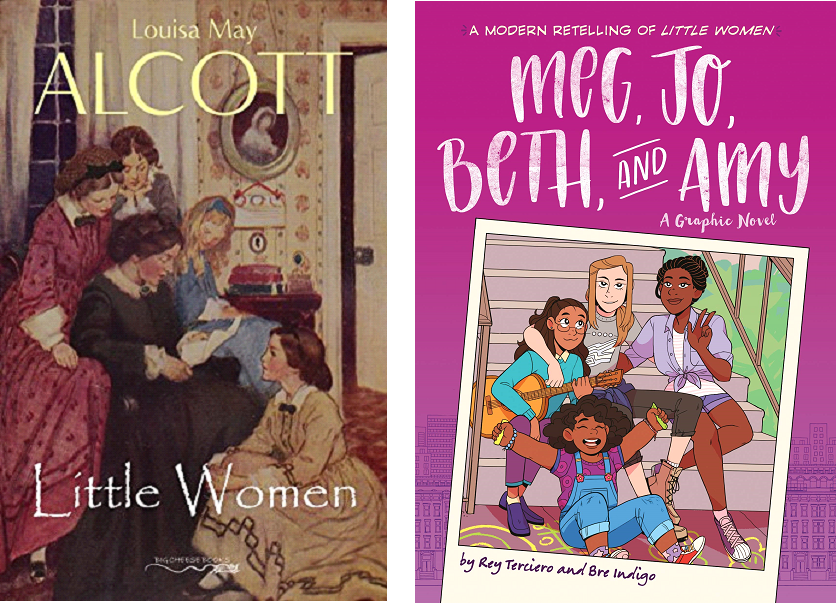
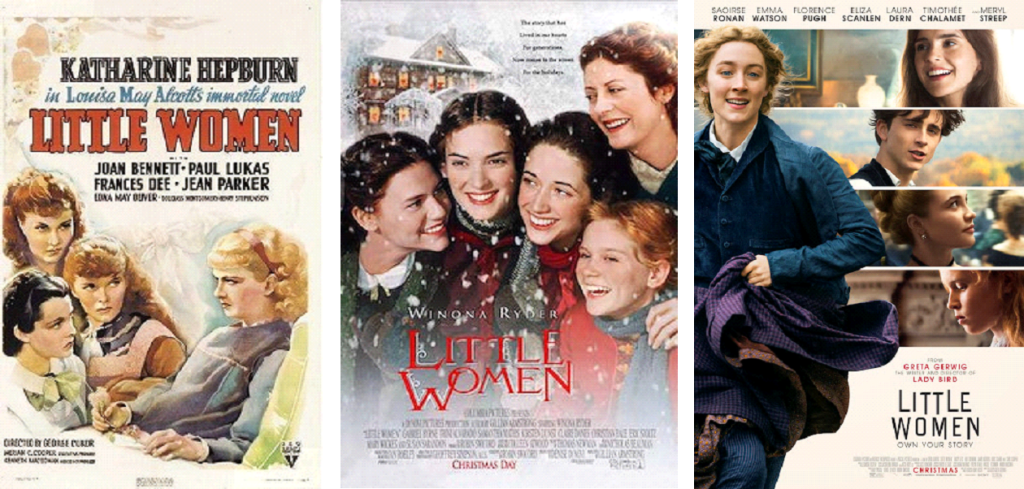
Read the classic Little Women or the contemporary graphic novel, Meg, Jo, Beth, and Amy (an exceptionally good adaptation).

Now watch one of the film adaptations:

Compare the book or graphic novel to one of the film adaptations. How did the book characters come to life on-screen? What elements of the story were preserved? What was changed? How was the story modernized in the graphic novel? Which format did you like best?

The Polio Crusade: Exploring Diseases of the Past

Sometimes it’s hard to talk about COVID-19 because we are in the middle of the pandemic. It can be easier to discuss a disease of the past. Polio was a particularly interesting disease because it primarily affected children and was heavily featured in media as part of the March of Dimes campaign, run by the National Foundation for Infantile Paralysis.

Watch A Paralyzing Fear: The Story of Polio in America or The Polio Crusade.

  1. Why were people so afraid of polio?
  2. What were some of the ways that the NFIP raised money through the March of Dimes campaigns?
  3. What were some obstacles that scientists faced in developing an effective vaccine?
  4. Why were most parents willing and eager to volunteer their children for the trials?

Talk to your older relatives and ask about their experiences with polio or with the vaccine. Did they have polio? What was their treatment like? Did they know kids or adults with polio? When did they receive the vaccine?

Why We Need Journalism More Than Ever

Until the number of U.S. cases and deaths recently skyrocketed, many people have been dismissive of encroaching pandemic. A Pew Research survey from the week of March 10-16 showed that 37% of the 8,914 adult participants believed that media greatly exaggerated the risks of coronavirus. Perceptions of media coverage have varied by the amount of news and the specific source primarily consumed. As the tides are tragically turning, with cases skyrocketing in the U.S., this is not a time to criticize or dismiss messages, nor clump all outlets and content into a faceless “Big Brother” media entity.

I’m not advocating that we heed all advice, especially the (mis)information spread by social media. What I mean is that we need to stop demonizing journalists and recognize that we have never needed them more. If we’re lucky enough to be stuck at home, professional and citizen journalists are our link to local, national, and international information. Without our own eyes and ears in the world, we must rely on others to tell us what is going on, especially when the stakes are so high.

To keep reporting and producing media content during an outbreak is an act of bravery. In 1793, Andrew Brown was the only printer to keep producing his daily newspaper throughout the yellow fever epidemic. In an era centuries before computers, the Federal Gazette became the only means of informing and connecting the people of Philadelphia.

While we certainly have an abundance of choices now, it doesn’t make the work less dangerous. Journalism is an essential service. As Chris Kieffer wrote in this letter of appreciation to the staff of the Daily Journal of Tupelo, Mississippi, “Great reporting and photography can’t be done from a safe ‘social distance.’” Reporters have already become sick on the job. And yet, our focus has largely been on criticizing this risky work.

Instead, we should be supporting journalists and producers of media content at this critical time. We need to recognize the value of all people who continue to work to make our society function. Without credible media sources to turn to, we won’t know how the pandemic is impacting lives outside of our own bubbles (which are quite small these days). We won’t know who needs help or ways to help from afar. We won’t know what to do if we have symptoms or where to go. And, without news, we won’t know when the crisis finally subsides and life can return to our new normal.

Social media is great for connecting with friends and family, but it is not a substitute for local, national, and international news content. Recognize the value of those producing content so that most of us can have the luxury of staying home and the benefit of learning through media channels when it is once again safe to experience life first-hand once more.

Learning Through Historical Fiction: Books for Kids and Teens About Epidemics

Reading historical fiction can teach you a lot about experiences people may have had during outbreaks of the past. In this genre, authors weave facts into their fictional stories and characters. I recommend reading these works of historical fiction and then conducting your own research on the epidemic and disease featured.

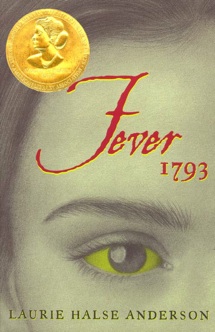
A notable example is Laurie Halse Anderson’s Fever 1793, aimed at readers ages 10-14.

She uses documents from the real yellow fever epidemic in Philadelphia to tell the story of 14 year-old Mattie Cook. This book is an exciting read and so well-done that it is often used as a teaching tool. Here are study guides that go along with the book.

Joyce Rockwood’s young adult novel To Spoil the Sun explores the devastating impact of smallpox on a Cherokee tribe in the 16th century. More of the story is fictionalized in that it isn’t set in a specific outbreak, but provides a perspective that has rarely appeared elsewhere.

Smallpox Strikes! by Norma Jean Lutz (ages 8-12) and describes the real-life inoculation controversy in the 1721 Boston epidemic. A boy must choose between following his family’s wishes and protecting the town against smallpox through the practice of inoculation (intentionally infecting yourself with disease in hopes that you’ll get a milder case).

For younger readers, book #26 Balto of the Blue Dawn of the Magic Treehouse series (very) loosely tells the story of the sled dogs that saved the children of Nome, Alaska from diphtheria in 1925. Compare Jack and Annie’s tale to the real story as told here.

Here are other historical fiction works about disease:

What makes for a good work of historical fiction? How do authors use facts to create interesting fictional narratives?

Think about the current pandemic. How could these experiences be told in what will someday be historical fiction? Where would you set your story? What factual details would be important to include?

What the Archives Didn’t Teach Me About Life in a Pandemic

In researching my book, I spent months studying primary sources: newspaper articles, pamphlets, public health records, personal correspondence, diary entries and other materials. I never expected that I would see first-hand what a global contagious threat would look like in my life time. I had an idea of the progression of quarantine and the pattern of media coverage. At the same time, no book or microfilm prepared me for a number of aspects in this experience.

  • The Waiting Game: Nothing that I’ve read addressed what it is like to feel fine, have your family feel fine, but know that the danger is coming. . .for months and is not a matter of if, but when. I’m sure the people in the army camps of 1918 that got hit with the March/April wave of influenza felt similarly–just no one wrote about it.
  • Balancing Crisis Mode with Everyday Life: In the yellow fever epidemic of 1793, townsperson Elizabeth Drinker made daily notes in her diary that combined mundane activities like taking a walk with notes about the latest death toll and friends who had passed. I never imagined how strange it would be to do the basic things we have to do, like buy dog food, within the context of the COVID-19 cloud. Everything is the same, yet it’s not the same.
  • Some people are fools. Newspapers of the past occasionally mentioned individuals that broke quarantine and were then arrested. Since they didn’t have social media in 1925, for example, there weren’t Instagram photos capturing crowds flaunting their poor choices and lack of consideration for others.
  • Parenting in a pandemic: This is a big one that NO ONE talked about in the past. Children were part of past epidemics, of course, and were mentioned when they became ill and died, but the stories of active parenting during such a time were not documented and a preserved. As parents, it’s a tricky time. Not only are we juggling childcare and work, but we are also trying to balance crisis and despair with making sure our kids are fed, engaged, and have pretty good days. We have the added challenge of explaining and demonstrating this new reality without terrifying them and inciting panic. At the end of the day, our kids deserve to think that the world is good, they are safe, and this will pass.
  • How much I would miss the world during social distancing. I am certain that the groups of students quarantined at the University of Kansas and other schools felt lonely, bored, and isolated. However, we don’t have their personal testimonies about the experience. We are privileged to be safe here as a family. Yet, I will fully admit that I mourn our normal reality.
    Being extra-extroverted, I knew that I would have these feelings. But it’s not just my friends that I miss. I love being part of a community–like a normal one, in which you see the same faces at stores, parks, karate, and on campus. I miss teaching to human students sitting in front of me, even if they fall asleep sometimes. I want maskless faces to slightly breech the six-foot distancing just to chat for fun, comment on the weather, or to just return a “hello.” Someday we’ll get back to a new version of that world.

What does this all mean, aside from my own lamenting? We need to be writing our stories and recording the diverse experiences of others so that future generations can better understand what living at this time was like.

So you didn’t like The Sound of Music: Examining Generational Shifts in Viewing Preferences

As a kid, I remember my dad often hyping up a movie that he had seen years before. “I laughed so hard,” he told us repeatedly as we prepared to watch the 1965 western comedy Cat Ballou. My sister and I barely chuckled in the entirety of the 97 minute film. Yesterday, my girls had a similar experience with The Sound of Music. While they enjoyed the familiar music, they found the movie “too long,” “too romantic” and overall, “boring.”

20th Century Fox. Public Domain.

What shapes our viewing experience? First, let’s look at pop culture products that have made it through the test of time (in other words, contemporary audiences still “get” them). Watch this clip from Charlie Chaplin’s 1928 silent film The Circus:

What happened in the scene? How did Charlie Chaplin respond? Can we relate to his reactions? Why?

Many older films and TV shows aren’t quite as easy to understand. Some just haven’t aged well, meaning that what was considered funny, relevant, or appropriate when the film/show came out, is not now. Culture and technology changes so what seemed new, exciting, and acceptable at the time doesn’t always work for future audiences and may be offensive.

What about movies that parents love but their kids do not? Why do we have these differences in our consumption experience? One reason may be changes in how stories are told. Films used to slowly build a narrative, using plenty of dialogue to fill in each moment in the story. Although the kid and singing scenes in The Sound of Music move along, the adult exchanges are pretty slowly-paced and over-dramatized.

On the other hand, our post modern films and TV shows are more fast-paced and fragmented, assuming that audiences can fill in the pieces or that they don’t matter. Fewer lines of dialogue convey about the same thing. What is a film you didn’t like that your parents do? Why do you think that is?

Generation gaps happen the other way as well. You definitely enjoy books, music, games, shows, and movies that your parents either don’t understand or don’t understand why you like them. Here’s an example from our house:

I am not a fan of the books or movies, yet my kids love them because they can relate to the characters and have grown up reading graphic novels.

How about in your house? What do you like that your parents don’t? Why do you like the product? Ask your parents why they don’t like it. What explains the difference in opinion?

What movies from your childhood will you want to share with your future children?

My Favorite Things: Exploring the Story of the Sound of Music

The Sound of Music is based on a real Austrian singing family. Maria von Trapp wrote The Story of the Trapp Family, published in 1949, which was turned into a Broadway play. Its iconic film adaptation, starring Julie Andrews, came out in 1965.

How much of the story was changed for the film? Let’s research true story of the von Trapps, first in this Smithsonian article. Look at this interview with Maria von Trapp herself (who passed away in 1987):

What was the focus of the interview? What did you learn about the von Trapp family?

Movie time
Analyze the 1965 Sound of Music, exploring how the adaptation brought von Trapp’s story to the big screen. How does the opening song set the tone for the movie? What do you think of the main characters, particularly the depiction of Maria? How is Captain von Trapp portrayed? Identify some of the overarching themes of this movie. What does it say about childrearing and childhood during World War II? About sacrifice? How does the music bolster these messages?

“Christopher Plummer and Julie Andrews on location in Salzburg during the filming of The Sound of Music, 1964″
20th Century Fox / Public domain

Compare the real story to the film. What details remained the same for the film? What was changed? How did these changes impact the narrative? If you were to do an adaptation of Maria’s story, what would you have done differently? Think overall how real-life events and biographies shift when they become fictional movies.

Bonus
Watch the Carrie Underwood live version of The Sound of Music. What worked well in this adaptation? What could have been better? Why didn’t this version reach the same level of success as the 1965 film?

Nothing is normal. We’re in a pandemic. Shifting Expectations in the Midst of Crisis

In 1751, George Washington’s diary entries stopped for 24 days because he was ill with smallpox. Forty-two years later, the yellow fever epidemic in Philadelphia forced President Washington to relocate to Mount Vernon. Disruption due to disease was frequent and expected.

This pattern continued with other epidemic moments as well. When influenza hit in 1918, Kansas, like many states, canceled all group meetings and conferences, closed businesses and schools, and prohibited public loitering. The University of Kansas canceled all classes and mandated quarantine. Even though students were stuck on campus, they were not expected to continue their studies. Healthy male students practiced drills and smuggled cigarettes into the makeshift hospital for their ailing friends. Female students cared for the sick, but were also encouraged to go on hikes and roast hot dogs.

In the midst of an epidemic, historical precedent suggests that life dramatically shifts to revolve around the outbreak itself. We are in that moment. For months, we’ve seen it coming. Videos and images from other countries have been showing us what will happen, how bad it will become.

I’m not advocating that we completely shut down working from home, online learning, or virtual activities. However, we do need assume that everything we do, task we assign, and decision we make is shaped by the current and future reality of this global pandemic. Our expectations in our normal, pre-social distancing world do not directly carry over.

Even if we are fortunate to not be sick, the current situation dramatically influences all of our routines. A month ago, this was my typical Friday morning: Wake up, care for dogs, make breakfast, wake up kids, get kids and husband off to school, exercise dogs, do some writing or other work, drive to campus, hold office hours, teach, stop at the grocery store, eat lunch. Now my Friday morning consists of juggling parenting, attempted home-schooling, attempted online teaching, and attempted writing. Added to the mix are my worries and concerns unique to this time: Will the kids get to see their teachers or friends? Am I doing enough to help them through this? And then, the questions plaguing all of us: Will the stores have milk? What about people who are less fortunate than we are? How will local businesses survive? What will happen to the economy? Does it make sense to plan anything in the next 6-8 months?

At the same time, our face-to-face outlets for dealing with stress and working through situations have been cut-off. Without lunches with friends, gym workouts, or (gasp) in-person meetings, it’s hard to emotionally process it all. I’m glad that we can have online classes, connect over social media, and take virtual karate. But let’s not pretend it is the equivalent of the real experiences that we all crave right now.

My point is that we need to adopt a communal understanding about this time. Our standards and goals, even for daily productivity, should not be the same because our lives are not the same. What we do now will inevitably affect the future, but it doesn’t mean we are setting the bar (or lowering the bar) for next year and beyond. In other words, we need to asterisk * the things we think, decide, do, and communicate with the pandemic grain of salt.

This * is already happening for many people. If you are sick or care for someone who is, or if you work in healthcare, you are already there, where the details of a pandemic are all that concern you. A month into the yellow fever epidemic, every article in the Federal Gazette mentioned disease–even those that talked about a local fire. Every poem and parable printed focused on the epidemic. Ads only addressed “remedies” and other related goods and services. Even if we are lucky enough not to be in this place and can play with the kids, teach our online classes, and do “regular things,” we need to remember that not everyone shares our fortune.

This is a strange time full of uncertainties. Enjoy the moments that feel a bit normal, especially if they bring hope and optimism. But let’s also give ourselves permission to take a breath and just try for average, not exceptional, since every accomplishment is extraordinary right now. If Washington could ease up multiple times because of disease, then so can we.
Standing on the Shoulders of Giants: History of Technology Timeline

In 1676, Sir Isaac Newton wrote, “If I have seen a little further it is by standing on the shoulders of giants,” describing how his inventions (and those of others) existed because they built upon existing ideas and achievements. With this quote, he himself was improving upon an existing reference, paraphrasing from John of Salisbury’s 1159 Latin text Metalogicon.

Our current technology didn’t just emerge. Instead, technological developments evolve from prior technological developments. Media have played and continue to play vital roles in this innovation. Mass communication (or the ability to mass produce media content) isn’t just about providing books and newspapers. The ability to record ideas in a form that can be distributed profoundly affected all facets of life. With books, for the first time, people could build on others’ ideas then progress forward. You didn’t need to be within earshot to learn from another person. Many different people, often from different places, contribute to the success of an invention.
Let’s take the history of the car for example.


Depiction of 1908 Ford Model T Touring car, from Ford’s full-page advertisement of the first Model T in the Oct. 1, 1908 issue of Life magazine, volume 52, page 365.

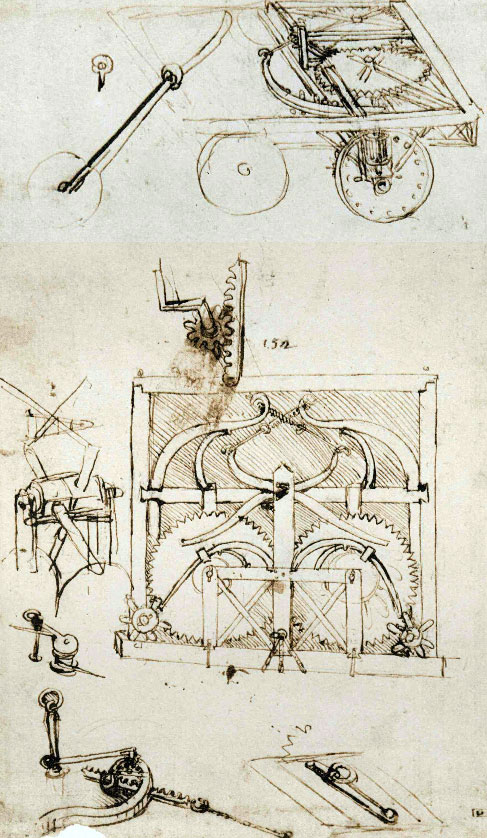
The Ford Motor Company didn’t just magically create a working car in 1908. They relied and improved upon existing car designs, created by Karl Benz in 1885 and Charles and Frank Duryea in 1893. These designers depended on earlier inventions and conceptualizations to make their automobiles work: the internal combustion engine, the carriage design and parts of a car. Oh, and the concept itself–that a vehicle could be self-propelled (conceived and invented by Leonard da Vinci in 1478).

Leonardo da Vinci / Public domain

Moving forward in time, this video conveys the many people involved from bringing the first cars to our modern day automobiles:

For each of these inventions, people could read about what had been done and then improve upon the existing designs.

History of Technology Timeline Activity
1. Choose something that we use in everyday life (an appliance, item of clothing, your phone or other entertainment technology, or anything that you are curious about).
2. Research the roots of that item. Identify all the different “players” that contributed–those who invented earlier models (even if they didn’t work) or pieces of the technology.
3. Using a large piece of paper, create a timeline that shows the evolution. For the car, we would start with da Vinci and map it out to today’s car. You could also depict this progression through a drawing or photo collage.

We take for granted the technology that we have. It’s important to remember that Newton was right. We must stand on the shoulders of giants to move forward.

The Space Race: Who was forgotten in the story?

As the book and movie Hidden Figures showed us, media coverage of the Space Race left out many important people. While space museums have added more exhibits featuring women, including women of color, most of these women were given little attention in their historical moment compared to the (white, male) astronauts and others who contributed to the first rocket launches. Check out this article.

For this activity, research one of the following great NASA women. What was her story? How did she come to work for NASA? What was her contribution to space exploration? Did media of the past (newspapers and television) tell her story in her moment? If so, how was she portrayed? If not, why do you think she was left out? Has her story been told since?

  • Dr. Thora Halstead
  • Dorothy Vaughan
  • Katherine Johnson
  • Dr. Christine Darden
  • Eleanor Francis Helin
  • Dr. Sally Ride
  • Dr. Shannon W. Lucid
  • Dr. Rhea Seddon
  • Dr. Kathryn D. Sullivan
  • Dr. Judy Resnik
  • Dr. Anna L. Fisher 
  • Nancy Grace Roman
  • Margaret Hamilton
  • Mae Jemison

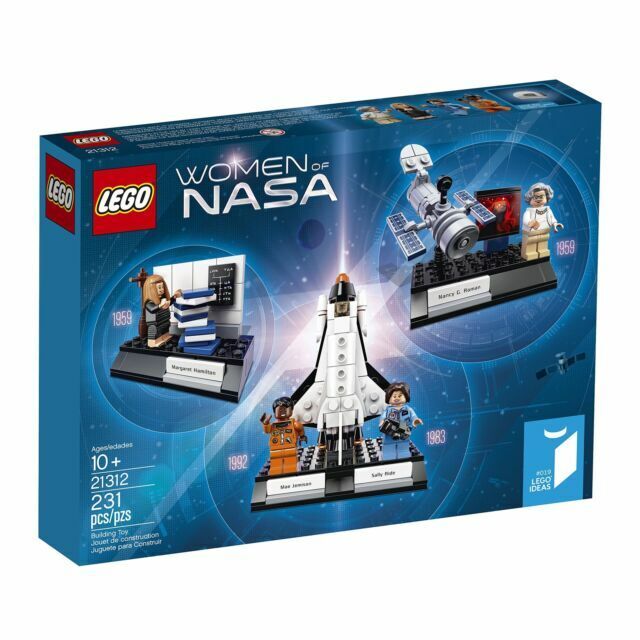
Now think about Hidden Figures and other ways that some of these stories have been captured and preserved in collective memory. For example, this LEGO set:

Stock photo

What is one shortcoming of this LEGO set? What else needs to be done to highlight these contributions? Why is it important to remember important female NASA pioneers and people of color who have been left out in the mainstream historical narratives?

For further reading, check out these books: